


BLOG
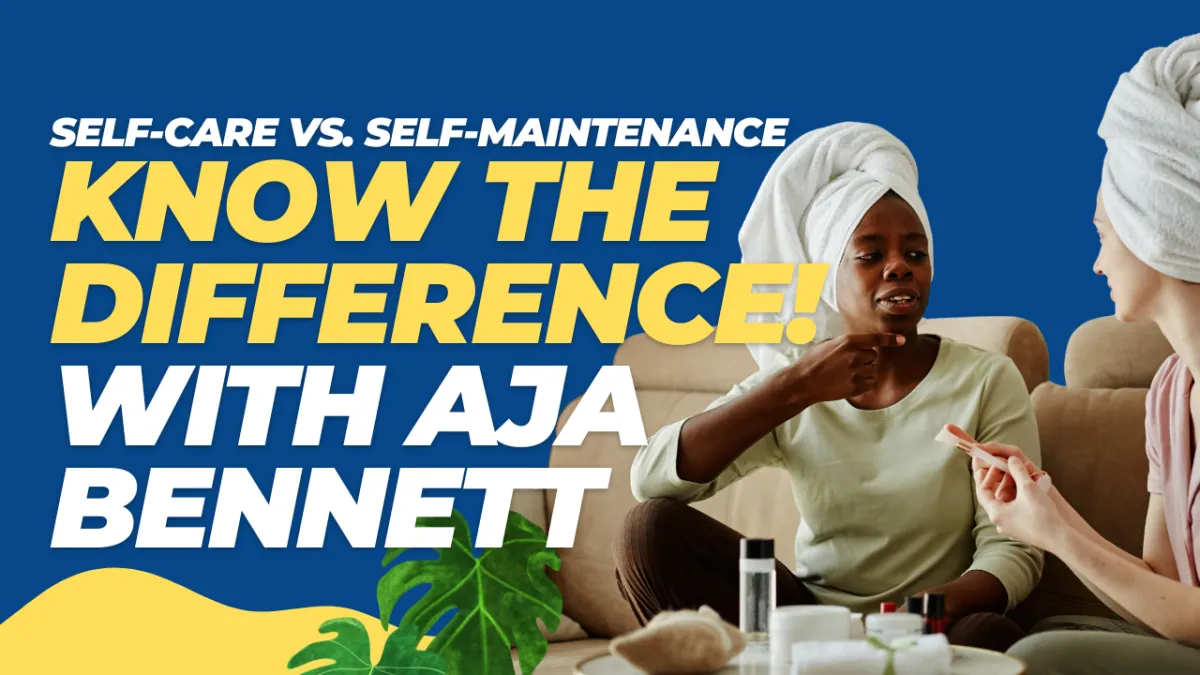
Self-Care vs. Self-Maintenance: Know the Difference with Aja Bennett
Have you ever found yourself ticking off those self-care boxes—a mani-pedi or a quick coffee break—yet still feeling drained and unfulfilled? What if everything you thought you knew about self-care was just scratching the surface?
As moms and entrepreneurs, we wear so many hats. But in the process of taking care of everyone else, are we actually taking care of ourselves? Or are we just maintaining the bare minimum?
The Critical Distinction: Care vs. Maintenance
Self-care and self-maintenance are so close that you might not know which category to put things in. Is going to the spa self-care or self-maintenance? What about getting your nails done?
Self-care is relaxation with the intent to relieve stress. It's about paying special attention to your needs with focus and intention, just like a caregiver gives special attention to someone else's needs.
Self-maintenance is the routine upkeep. Getting your nails done every two weeks because you don't want them lifting? That's maintenance. It's something you do almost mindlessly, without the intention to relieve stress and relax—it's just part of your ritual.
Here's the biggest myth: One of the biggest myths about self-care is that it's all about outward appearance. "I'm gonna get my hair done 'cause when I look good, I feel good." But are you really good? That's the question we need to start asking ourselves.
Why Mental Health Is Non-Negotiable Self-Care
Mental health helps you understand who you are and makes you stronger so you can better support the people around you—your family and your loved ones.
We often ignore the connection between our mental health and our physical health. High rates of diabetes, heart disease, and other illnesses are caused by mental health issues. If we continue to ignore this connection, these numbers will continue to rise.
When your business isn't going the way you want, anxiety and depression can weigh on you mentally. And although it will pass, you need support to get through it.
Schedule Self-Care Like Any Other Appointment
Finding a mental health provider and actually getting therapy is a form of self-care. Make an appointment like you make appointments for everybody else. Now you're scheduled in to take care of your mental health.
Mental Health and Spirituality: Both/And, Not Either/Or
There's always a negative connotation when it comes to mental health, like you're going there because something's wrong. But we're all going through something. You go to therapy as you would go to the doctor.
For My Church Family: You Can Do Both
If you've been raised in church, you believe that God is the answer—and that's true. However, you can trust God and still take care of your mental health.
You may still have anxiety, and that is real. To be dismissive of anxiety and depression is not acceptable.
Even as you're walking in faith, you may still need a therapist with a background in psychology because sometimes people have disorders that are going undiagnosed. The spiritual guidance alone may not be enough—it's deeper than that.
Those disorders are real. When you have a disease in the mind, it often gets overlooked because you can't see it. But we have to understand that our spirits need to be fed as well as our minds. The Bible talks about the renewing of your mind. It's all tied in together—you have to take care of both.
Building Legacy: Modeling Self-Care for Your Children
We're legacy building. If we're teaching our children work ethic and how to build businesses, we should also model self-care. We don't want our children wrapped up in hustle and grind just because that's what they saw mommy doing.
When our children see us taking care of ourselves—going to therapy, setting boundaries, pursuing our passions—they learn healthy patterns. Without that model, we see alarming rates of depression because we haven't dealt with trauma or been shown how to handle life's challenges.
The Bottom Line: You Can't Pour From an Empty Cup
If you're mentally or physically drained, if you're pouring from an empty cup—you can't serve the people you want to serve.
When we don't address stress, past hurts, or trauma, it mounts. Then we can't show up for our families or run our businesses effectively. When our brain says enough is enough, it can lead to an explosion of emotions and irrationality.
Your Action Steps
Assess your current practices - Is it care with intention, or just maintenance?
Schedule mental health check-ins - Make therapy appointments like any other appointment
Practice intentional care - Focus on stress relief and relaxation, not just routine upkeep
Address the whole person - Body, soul, and spirit collectively
Model self-care for your children - Show them what healthy self-care looks like
Be unapologetically yourself - Pursue your passions and gifts as part of self-care
Final Thoughts
In order to pour out, you have to be filled. Don't overwhelm yourself with too many responsibilities without taking increments of self-care.
If you're not there for you, you can't be there for anybody else.
Take care of your mental health. Take care of your whole self—because you deserve it, and because everyone who depends on you deserves the best version of you. Not the burnt-out version, but the filled up, cared for, intentional version who shows up with her whole self intact.
Remember: Your overall wellness includes your body, soul, and spirit. You're not choosing between physical health, mental health, or spiritual health—you're caring for all of it, because it's all connected.